>>FULL REVIEW
No Rest for the Wicked is what happens when the studio behind Ori decides to make something beautiful, brutal, and deeply unpleasant to survive.
This is not Diablo with prettier art.
It is slower, heavier, meaner, and much more deliberate. You are not deleting dirty enemies a second while loot explodes out of a demon like a slot machine, You are watching stamina, timing attacks, dodging, getting greedy, dying and pretending it was not your fault.
The combat is the main reason to play.
Every swing has weight and every enemy demands respect, even basic fights can go sideways if you treat them like trash mobs. Big weapons like a tax audit, smaller weapons give you mobility, and a bad decision gets punished fast.
When it works, it feels excellent. When it does not, it feels like the game is laughing at you from inside a puddle of mud.
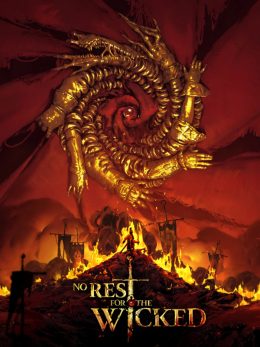
The world the other star. No Rest for the Wicked looks incredible, not because it is shiny, but because it has taste and grit. Everything feels rotten, wet diseased and more importantly handcrafted.
Exploration feels more personal than most ARPGs. The world has shortcuts, verticality, hidden paths and enough visual detail to make poking around the map feel worth it. Moon Studios clearly knows how to build spaces that pull you forward.
The story has promise, but right bow it feels more like a setup. There are plagues, politics, religion, and grim fantasy drama. The game is currently in Early Access so the full shape its not all here yet.
No Rest for the Wicked is ambitious, but currently unfinished. Some systems still feel a bit rough. Inventory management can annoy you. Durability may test your patience as it sometimes slows the gameplay down. Performance can be iffy depending on your specs. The game has improved, but it is not a frictionless experience.
Still, there is something here that most action RPGs do NOT have.
A vision.
This not a typical loot treadmill wearing a dark fantasy costume. It feels deliberate, nasty, and handcrafted. It has problems, but it also has its own identity.
No Rest for the Wicked is not ready to be called a finished classic of the genre. However, it is worth watching, and for the right player, already worth playing.
It is unfinished, and occasionally annoying.
But it has more soul than most ARPGs have in their entirety.
WHO THIS IS FOR
For players who want a beautiful, brutal action RPG that rewards patience and exploration.
SKIP IT IF
Skip it if you want fast, polished Diablo-style loot farming.